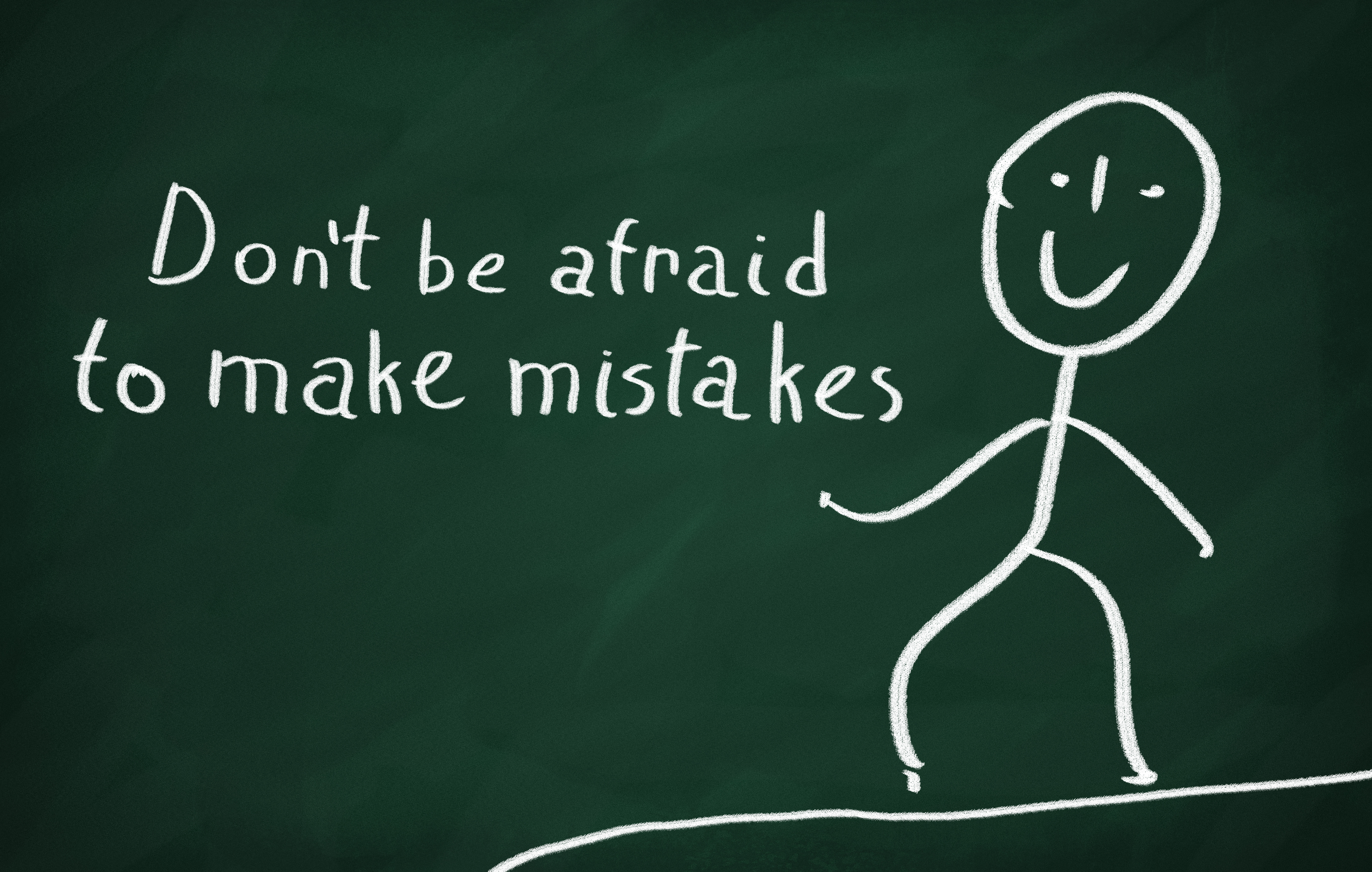
A typo in a proposal. A line item I forgot to include. A detail I glossed over and had to circle back on. I used to cringe at all of it. Lately, I've started to see it differently.
I work in a world that is increasingly automated. I use AI tools every single day. I help clients implement them. I write about them. I think about them constantly. And if there is one thing I know for certain about the AI I use and build with, it is this: it does not forget to attach the file. It does not mistype a client's name. It does not send a proposal missing the retainer line.
I do, though. And I think that actually matters.
The pressure to be frictionless
There is a quiet pressure building in professional life to perform like a machine. Respond fast. Never miss a detail. Deliver perfectly formatted output every time. And when you do slip up, fix it quickly and cleanly, as if it never happened.
We are measuring ourselves against tools that do not have bad mornings. Tools that do not lose track of a thread because they were also managing four other clients, a full-time job, and a grocery list running in the background of their brain.
That is not a fair benchmark. And chasing it has a cost.
What a mistake actually signals
When I catch a typo in something I sent, my first instinct is still embarrassment. But there is something else underneath that now, something that has been getting louder the longer I work alongside AI: relief. Because the typo means I was the one who made it.
I was in the middle of something real. I was moving fast because I care about the work. I was juggling context that no language model has, the nuance of a client relationship, the weight of what is riding on a project, the specific version of judgment that comes from actually being inside a situation rather than processing a description of one.
Mistakes are not proof that you are falling behind. They are proof that you are still in it.
The forgetting, the typo, the overlooked line, these are not bugs in the human system. They are byproducts of being genuinely present in a life that has a lot in it. AI does not have a life. It has a context window.
The correction is part of the work
I also think we undervalue what happens after the mistake. The quick email: "Hey, I missed this, here's the updated version." The follow-up call: "I want to revisit something from our last conversation." The recalibration after you realize something did not land the way you intended.
That kind of correction is relational. It requires self-awareness. It builds trust, not erodes it, when it is handled with honesty and no drama. No AI I have used is capable of the kind of repair that a grounded, direct human apology delivers.
There is a reason people still prefer working with people, even when automation is faster and cheaper. That reason lives in moments like these.
So I am keeping my mistakes
Not recklessness. Not sloppiness. I still proofread. I still build checklists. I still care about the quality of my work deeply.
But I am done performing infallibility. I am done treating every small human fumble as evidence that I am not good enough, not organized enough, not sharp enough to compete in a world where software does not sleep.
I made a mistake today. I caught it, I fixed it, and I moved on.
That is not a failure. That is just what it looks like to be a person doing real work.
And right now, in this particular moment in history, I think that is worth something.